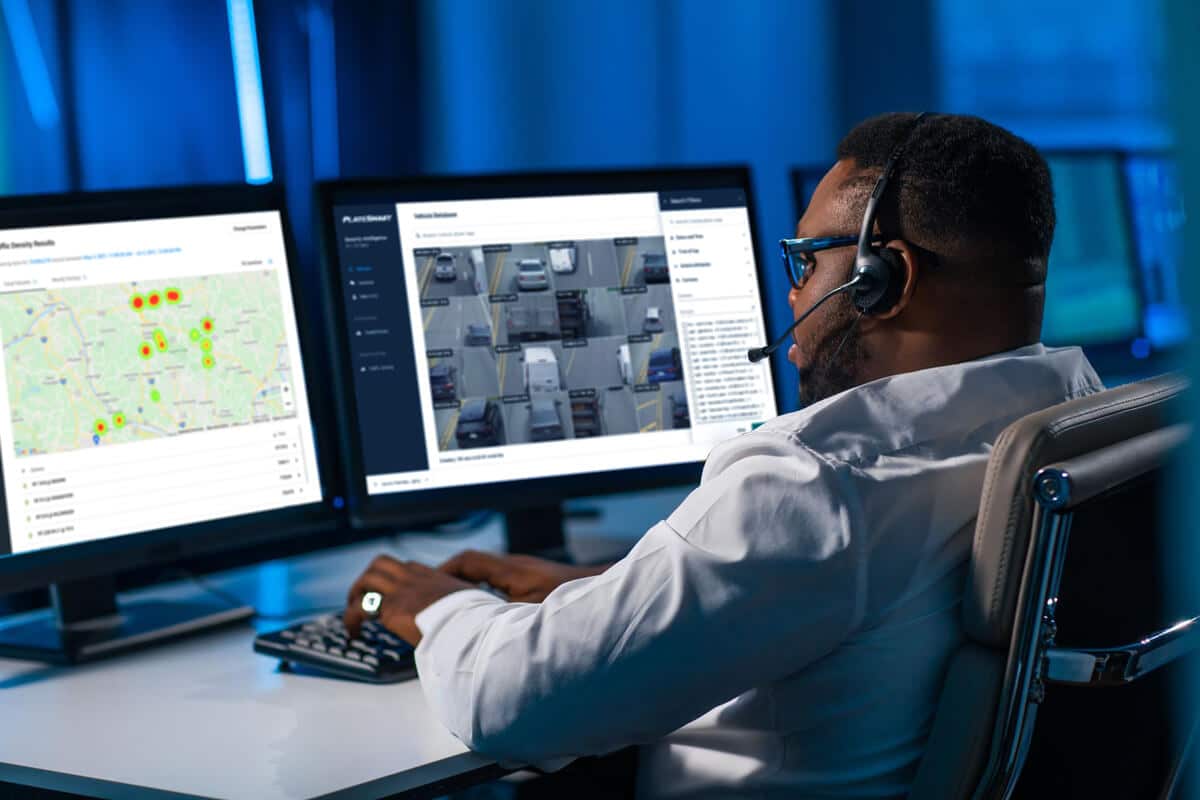
This project provides a hands-on opportunity to build a
production-style AI-powered vehicle recognition and access control
system. The solution leverages computer vision and machine learning
to automatically identify vehicles and manage access permissions
with continuous self-improvement capabilities.
Background Information
Vehicle access control systems are widely used in residential
communities, office parks, campuses, parking facilities, and
industrial zones. Traditional access control solutions—such as RFID
cards, physical permits, or manually maintained license plate
whitelists—often suffer from high maintenance costs, poor scalability,
and limited adaptability to real-world conditions.
With the rapid advancement of computer vision and machine learning,
vehicle recognition systems based on cameras and AI models have become
increasingly feasible. These systems can identify vehicles using
license plate recognition, vehicle attributes, and contextual
information, enabling automated and contactless access control.
However, many existing AI-based vehicle recognition systems rely on
static models and manually curated datasets. They struggle with
real-world variability such as changing lighting conditions, weather,
camera angles, occlusions, dirty license plates, new vehicle models,
and evolving traffic patterns. As a result, recognition accuracy
degrades over time unless frequent manual retraining and tuning are
performed.
There is a growing need for an AI-powered vehicle recognition system
that can continuously learn, adapt, and improve itself, reducing human
intervention while maintaining high accuracy and reliability in dynamic
environments.
Problem Statement
Current vehicle recognition and access control systems face several
key challenges:
Limited Adaptability: Static AI models fail to
adapt to new vehicles, environmental changes, and long-term data
drift, leading to declining recognition performance.
High Manual Maintenance Cost: System administrators
often need to manually update vehicle databases, retrain models, and
handle edge cases, which is time-consuming and error-prone.
Recognition Errors in Real-World Conditions:
Factors such as poor lighting, rain, snow, motion blur, camera
misalignment, or partially blocked license plates significantly
reduce accuracy.
Lack of Feedback-Driven Learning: Most systems do
not leverage user feedback, access outcomes, or correction data to
improve future predictions.
Scalability and Generalization Issues: Solutions
that work well in one location often fail when deployed across
multiple sites with different cameras and traffic patterns.
The challenge is to design a robust, scalable, and self-improving
vehicle recognition and access control system that maintains high
accuracy over time while minimizing manual intervention.
Proposed Solutions
This project proposes an AI-Powered Self-Improving Vehicle Recognition
& Access Control System with the following key components:
1. Multi-Stage Vehicle Recognition Pipeline
Use computer vision models to detect vehicles and license plates
from camera feeds
Apply OCR and vehicle attribute recognition (make, model, color) for
redundancy
Combine multiple signals to improve overall recognition confidence
2. Feedback-Driven Learning Loop
Collect system outcomes (successful access, denied access, manual
overrides)
Capture user or administrator corrections when misrecognition occurs
Store corrected data as labeled samples for continuous learning
3. Continuous Model Improvement
Periodically retrain or fine-tune models using newly collected
real-world data
Implement automated data validation to prevent noisy or incorrect
labels
Detect data drift and trigger retraining when performance
degradation is observed
4. Confidence-Based Access Control
Use confidence thresholds to decide automatic access, secondary
verification, or manual review
Reduce false positives by requiring stronger evidence in uncertain
cases
Improve security while maintaining smooth traffic flow
5. Scalable System Architecture
Modular design separating data ingestion, inference, learning, and
access control
Support deployment across multiple locations and camera setups
Enable centralized monitoring and performance analytics
6. Privacy and Security Considerations
Encrypt sensitive vehicle and access data
Limit data retention and anonymize samples where possible
Ensure compliance with relevant data protection regulations